Geotab CEO's 'Adapt or Die' Warning Lands as AI Reshapes Fleet Tech
From Blues' MATS debut to a Fleetio-Motive tie-up and Verizon's small-business play, fleet technology is consolidating fast -- and Geotab's Neil Cawse says operators who hesitate on AI won't survive the shift.
Blues Bets on Device-to-Cloud at MATS 2026
Blues used the Mid-America Trucking Show in Louisville this March to unveil its next-generation device-to-cloud connectivity system, the company's most aggressive push yet into commercial vehicle telematics. The pitch: a tighter pipe between the truck and whatever fleet management platform sits on top of it, with less middleware in between.
Technical specifics were thin on the ground, and Blues hasn't published pricing or integration partners. But the timing is notable -- MATS has quietly become the proving ground where telematics vendors either break through to mid-market carriers or fade into the booth-crawl blur. For fleet managers evaluating connectivity stacks in 2026, Blues is now a name worth a demo.
Fleetio, Motive, and Verizon Reshuffle the Platform Map
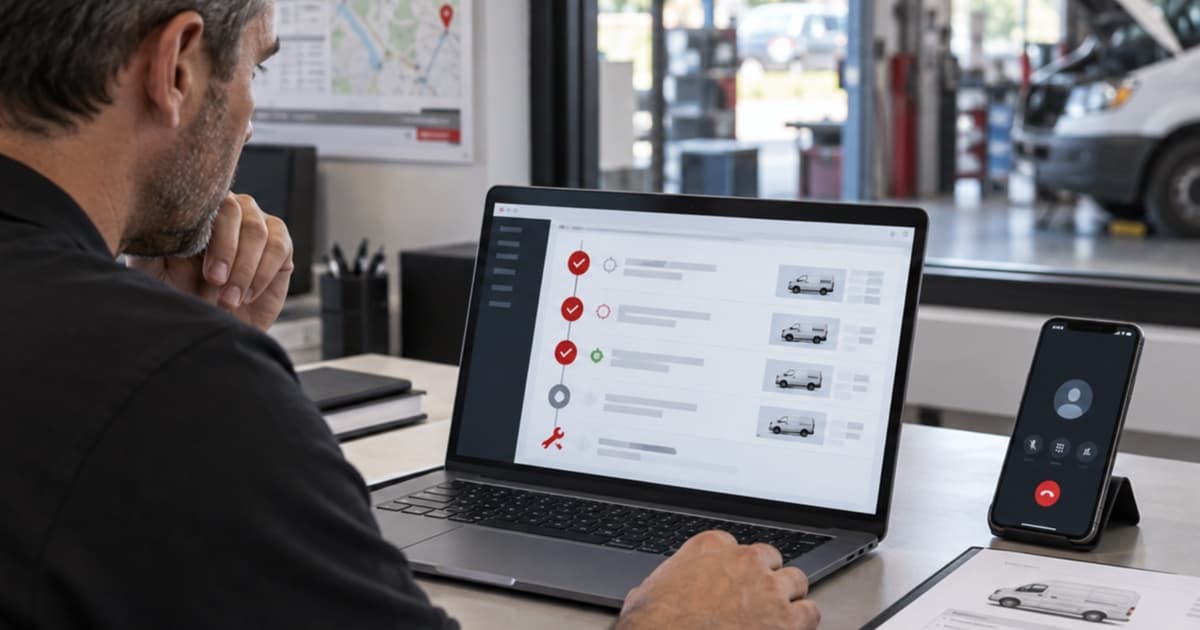
February brought the most consequential partnership announcement of the quarter: Fleetio and Motive launched a joint maintenance and optimization platform, stitching Fleetio's maintenance workflow engine to Motive's telematics and AI dash cam data. For shops that have long run the two systems side by side with duct-tape integrations, the native tie-up eliminates a meaningful chunk of reconciliation work.
Fleetio also shipped a standalone mobile app in February, putting work orders, inspections, and vehicle records in the hands of drivers and yard techs who've historically been locked out of desktop-first software. The release follows a broader industry shift toward mobile-first fleet tooling.
Meanwhile, Verizon stepped into the small-business segment with a pared-down fleet management offering aimed at operators running under 50 vehicles. The move signals that the carrier sees room below the Samsara and Geotab price points -- and that the SMB fleet market, long underserved, is finally getting enterprise-grade attention.
'Adapt or Die': Geotab and Penske Draw the AI Line
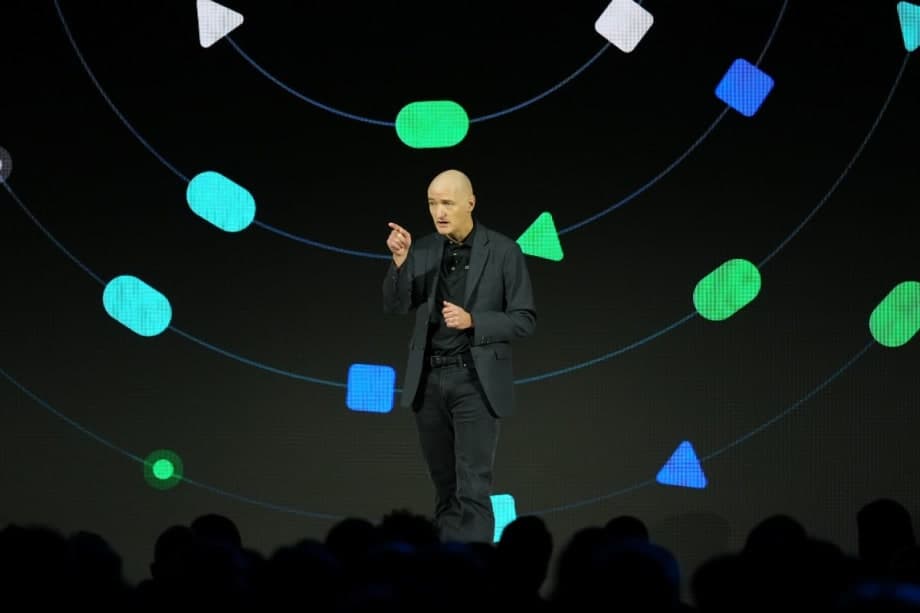
Geotab CEO Neil Cawse didn't soften the message in his February keynote, titled bluntly 'Adapt or Die: AI's Rapid Reinvention of Fleet Management.' Cawse argued that AI is no longer a productivity tweak layered onto existing workflows -- it's rewriting how routing, predictive maintenance, and driver coaching actually work, and the operators dragging their feet will lose ground they can't recover.
Penske offered the grounded counterpoint in a January panel, walking through what AI deployment actually looks like inside one of North America's largest fleets. The takeaways were less theatrical than Cawse's framing but arguably more useful: data hygiene is the bottleneck, model outputs need human review for months before they earn trust, and the ROI shows up first in maintenance cost avoidance -- not in the glamour use cases. For fleet managers pressured to "do something with AI," Penske's playbook is the more honest benchmark.
Training Infrastructure Catches Up to the Job
The National Private Truck Council launched its Private Fleet Management Institute in March, finally giving private fleet professionals a credentialing path tailored to their world rather than repurposed for-hire carrier curriculum. Private fleets have operated in a training vacuum for years; the institute is an overdue correction.
Heavy Duty Trucking released a Private Fleet Management Reference Guide and Training Manual the same month, and the National Truck Equipment Association is building convention programming around the specific pressures fleet managers now face -- electrification timelines, AI procurement decisions, and a driver market that refuses to stabilize. Taken together, the education push suggests the industry is finally treating fleet management as the specialized discipline it has always been.