AI Revolution Transforms Fleet Management as Technology Investment Surges
Major manufacturers and tech companies are launching AI-powered fleet management solutions, while industry consolidation accelerates digital transformation.

AI Assistants Lead Digital Fleet Management Revolution
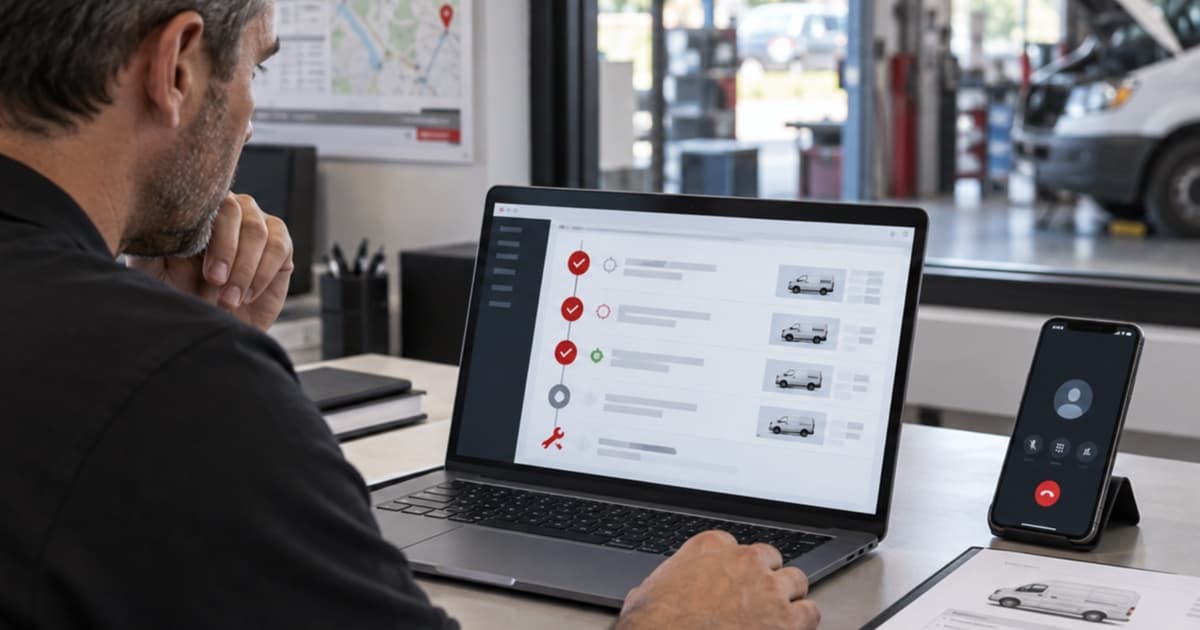
The fleet management industry is experiencing a seismic shift as artificial intelligence becomes the cornerstone of operational efficiency. MAN, the German truck manufacturer, has launched a groundbreaking AI assistant that promises to make digital fleet management "even easier and faster," marking a new era where conversational AI interfaces replace traditional dashboard-heavy systems.
This development comes alongside similar moves from other industry players. Motive has introduced AI-powered management tools specifically designed to improve driver coaching, while new AI-powered inspection tools are emerging that focus on fleet safety and cost reduction. These solutions represent a fundamental change in how fleet managers interact with their data and make operational decisions.
The shift toward AI-driven systems addresses a critical pain point for fleet managers: the overwhelming amount of data generated by modern connected vehicles. Rather than requiring managers to navigate complex dashboards and interpret multiple data streams, AI assistants can provide instant insights, predictive maintenance alerts, and actionable recommendations through natural language interactions.
Market Consolidation Fuels Enterprise Solutions Growth
The fleet management sector is witnessing significant consolidation as companies race to build comprehensive enterprise solutions. Breakthrough has expanded its fleet management capabilities through the strategic acquisition of Sokolis, launching new Enterprise Fleet Solutions that combine traditional fleet management with enhanced fuel and expense management capabilities.
This consolidation trend reflects the growing demand from large fleet operators for integrated platforms that can handle everything from vehicle tracking and maintenance scheduling to fuel optimization and driver management. The acquisition strategy allows companies to rapidly expand their service offerings while leveraging existing customer relationships.
Meanwhile, specialized solutions continue to emerge for specific market segments. Aion-Tech Solutions has launched the ROQIT platform specifically for zero-emission fleet management, addressing the unique challenges faced by companies transitioning to electric and hybrid vehicles. This specialization demonstrates how the market is evolving to meet the diverse needs of modern fleet operators.
Regional Modernization and Technology Adoption Accelerates
Fleet modernization is gaining momentum globally, with Thailand and Vietnam leading the charge in the Asia-Pacific region. These markets are demonstrating how emerging economies are leapfrogging traditional fleet management approaches by adopting cutting-edge digital solutions from the outset.
The regional adoption patterns reveal important insights about the global fleet management market. While established markets in North America and Europe focus on upgrading existing systems and integrating AI capabilities, emerging markets have the advantage of implementing modern solutions without legacy system constraints.
Transportation management surveys for 2025 indicate that digital transformation remains the top priority for fleet operators worldwide, with particular emphasis on predictive analytics, real-time visibility, and automated decision-making capabilities. Companies like DG Private Hire's adoption of Teletrac Navman's fleet management solution illustrates how even smaller operators are recognizing the competitive advantages of comprehensive digital platforms.
Operational Challenges Drive Technology Investment
The urgency behind fleet technology adoption is being driven by mounting operational pressures. In the UK, aging fleets are causing a significant rise in Service, Maintenance, and Repair (SMR) costs, forcing fleet managers to seek more sophisticated predictive maintenance solutions. This trend is not unique to the UK market, as fleet operators globally grapple with the challenge of optimizing vehicle lifecycles while managing rising maintenance expenses.
Claims pressure continues to persist as top fleet risks are revealed across major markets. Insurance costs, accident rates, and regulatory compliance requirements are pushing fleet managers toward technology solutions that can provide better risk management and real-time monitoring capabilities. AI-powered inspection tools are emerging as a direct response to these challenges, offering the potential to identify safety issues before they result in costly incidents.
The convergence of these operational challenges with advancing technology capabilities is creating a perfect storm for innovation in the fleet management sector. Fleet managers who previously relied on reactive maintenance and manual oversight are now investing in proactive, AI-driven solutions that can predict problems, optimize routes, and improve driver behavior in real-time.
For fleet managers, these developments signal a critical inflection point. The companies that successfully integrate AI-powered tools, comprehensive digital platforms, and specialized solutions for emerging vehicle technologies will gain significant competitive advantages in terms of operational efficiency, cost management, and regulatory compliance. The question is no longer whether to invest in advanced fleet management technology, but rather which solutions will deliver the greatest return on investment in an increasingly complex operational environment.