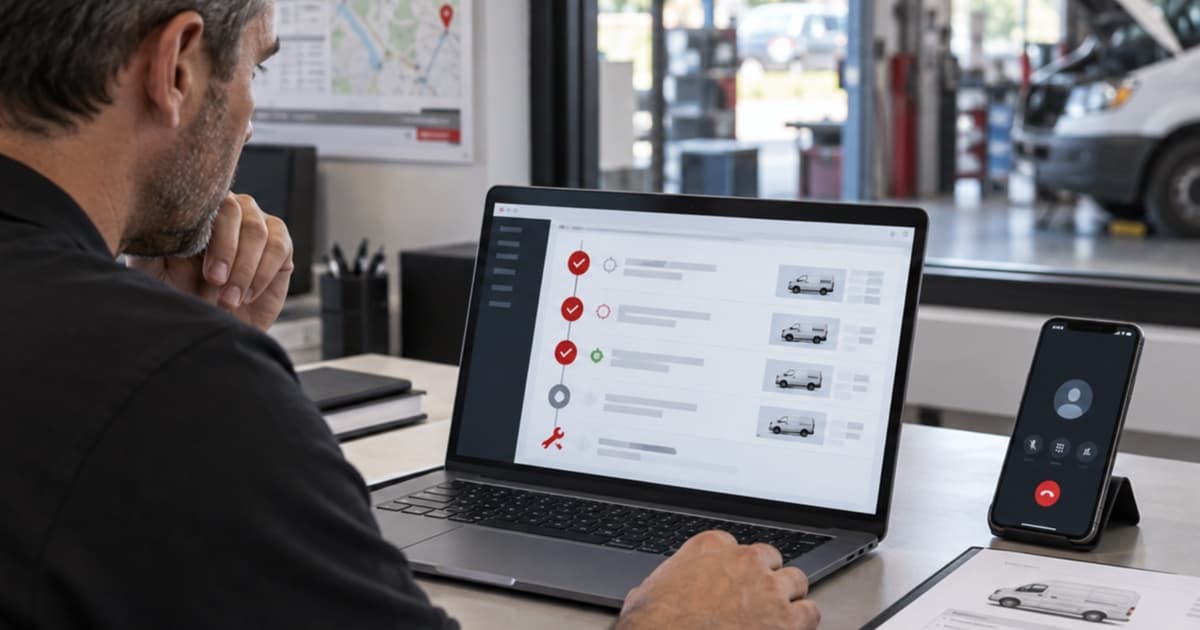
Fleet Technology Revolution: From Basic Tracking to Strategic Operations
Fleet management companies are rapidly advancing beyond basic GPS tracking, introducing AI-powered platforms and strategic partnerships that deliver measurable efficiency gains.

Technology Platforms Drive Operational Excellence
The fleet management industry is experiencing a significant technological transformation, moving beyond traditional GPS tracking to comprehensive platforms that deliver measurable operational improvements. Leading this charge is Kooner Fleet Management, which recently launched its enhanced FleetIQ platform designed to improve customer uptime through predictive analytics and real-time monitoring capabilities.
The company has strengthened its market position by bringing aboard Bill Cooper as Vice President of Sales to drive national growth initiatives. This strategic hire coincides with the broader industry trend of fleet management companies investing heavily in both technology development and talent acquisition to capture growing market demand.
Meanwhile, Merchants Fleet is expanding its technological footprint through multiple strategic initiatives. The company has enhanced its FleetShare platform and forged a new partnership with UFOFLEET to broaden its solution offerings. These moves reflect the industry's shift toward integrated platforms that can handle diverse fleet requirements from a single interface.
Integration and Modernization Transform Operations
Real-world implementation of advanced fleet technology is exemplified by Tucker Freight Lines' comprehensive modernization project. The company successfully integrated its Transportation Management System (TMS) with fleet systems, demonstrating how carriers are breaking down operational silos to achieve greater efficiency.
This integration approach is becoming the standard for forward-thinking fleet operators who recognize that isolated systems create inefficiencies and blind spots. By connecting TMS, maintenance, fuel management, and driver systems, companies can optimize routing, reduce downtime, and improve overall fleet utilization rates.
The technology evolution is also evident in fleet maintenance operations, where Challenger Motor Freight is leveraging Fleetworthy solutions to drive operational stability. This focus on maintenance optimization is crucial as fleet operators seek to extend vehicle lifecycles and reduce total cost of ownership in an increasingly competitive market.
Strategic Partnerships Reshape Market Landscape
The fleet industry is witnessing a wave of strategic partnerships designed to enhance service capabilities and market reach. A notable example is the collaboration between Allianz UK and Samsara for fleet risk management solutions, combining insurance expertise with telematics technology to create comprehensive risk mitigation strategies.
These partnerships reflect the industry's recognition that no single company can provide all the specialized solutions modern fleets require. By forming strategic alliances, fleet management companies can offer clients integrated solutions spanning everything from vehicle financing to predictive maintenance and risk management.
The partnership trend extends to electrification efforts as well. Amazon continues to expand its electric fleet with a record number of electric HGVs and plug-in vans joining its operations, while Toyota advocates for hydrogen and low-carbon fuels as key components of fleet decarbonization strategies. Meanwhile, NRG Riverside completed a £455 million refinancing specifically to renew its fleet, demonstrating the significant capital commitments companies are making to modernize their operations.
Strategic Implications for Fleet Managers
For fleet managers navigating this rapidly evolving landscape, the message is clear: technology adoption is no longer optional but essential for competitive survival. The companies making headlines today are those that view technology not as a cost center but as a strategic differentiator that enables superior customer service and operational efficiency.
The shift from basic tracking to comprehensive fleet intelligence platforms offers several immediate benefits for fleet operators. First, predictive analytics can reduce unplanned downtime by identifying maintenance needs before failures occur. Second, integrated systems provide holistic visibility across all fleet operations, enabling data-driven decision-making that was previously impossible.
Third, the emergence of specialized partnerships means fleet managers can access enterprise-grade solutions without massive internal technology investments. Whether it's advanced telematics, risk management, or alternative fuel integration, the partnership model allows even smaller fleet operators to compete with larger organizations.
Looking ahead, fleet managers should prioritize technology vendors that demonstrate strong integration capabilities and strategic partnership networks. The most successful fleet operations of the next decade will be those that successfully combine multiple specialized solutions into cohesive, intelligent systems that drive continuous operational improvement.
The industry's rapid evolution also suggests that fleet managers who delay technology adoption risk falling behind competitors who are already realizing efficiency gains from advanced platforms. As these case studies demonstrate, the technology is proven and the business benefits are measurable – making 2025 a critical year for fleet modernization decisions.