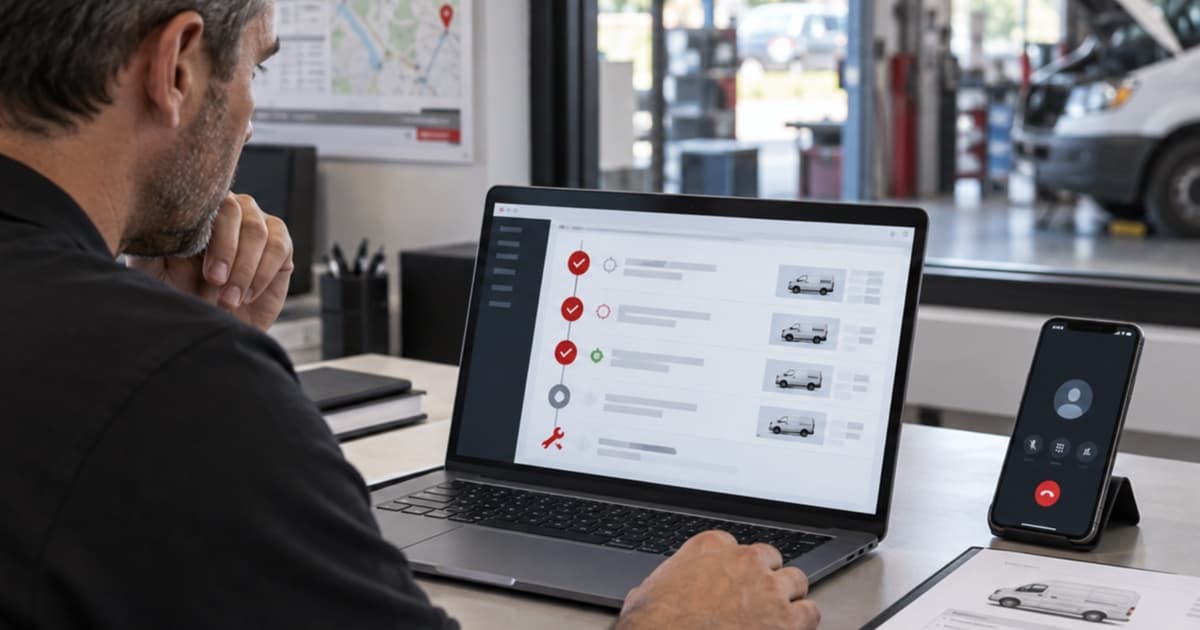
Fleet Technology Advances Drive Industry Transformation in 2026
Cloud-based tire management, AI security systems, and quantum computing partnerships signal major technological shifts for commercial fleets entering 2026.

Cloud-Enabled Technologies Reshape Fleet Operations
The commercial fleet industry is experiencing a fundamental technology transformation as we head into 2026, with cloud-based solutions and artificial intelligence emerging as critical differentiators for competitive operations. Leading this charge is the evolution of tire management systems that now leverage cloud computing to optimize performance across entire fleets.
Commercial tire management technology has moved far beyond simple pressure monitoring, with modern systems now providing real-time analytics on tire performance, predictive maintenance scheduling, and automated procurement recommendations. These cloud-connected platforms are enabling fleet managers to reduce tire-related downtime by up to 30% while extending tire life through data-driven maintenance protocols.
The integration extends beyond tires to comprehensive vehicle health monitoring. Cognizant's new partnership with Merchants Fleet represents a significant step toward enterprise-grade fleet technology solutions, combining advanced analytics with practical fleet management needs. This collaboration aims to streamline fleet operations through enhanced data integration and automated decision-making processes.
AI-Powered Security and Advanced Driver Systems Take Center Stage
Fleet security has become increasingly sophisticated with artificial intelligence now playing a crucial role in theft prevention and vehicle protection. AI-powered security systems are analyzing patterns in vehicle usage, identifying anomalous behavior, and providing real-time alerts to fleet managers before incidents occur.
These systems go beyond traditional GPS tracking, incorporating machine learning algorithms that can distinguish between authorized and unauthorized vehicle access, monitor driver behavior patterns, and even predict potential security threats based on location and timing data. The technology has proven particularly effective for last-mile delivery fleets, which face heightened security risks due to their predictable routes and valuable cargo.
Looking ahead to Work Truck Week 2026, industry education sessions will focus heavily on Advanced Driver Assistance Systems (ADAS), artificial intelligence applications, and evolving regulatory requirements. This emphasis reflects the industry's recognition that fleet managers must stay ahead of rapidly advancing safety technologies and compliance standards.
Heavy-Duty Market Challenges Drive Innovation Push
The heavy-duty trucking market's stagnation in 2025 has created urgency around technological solutions that can deliver measurable efficiency gains. Fleet operators are increasingly turning to advanced analytics and automation to offset market pressures and operational challenges.
This market pressure has accelerated adoption of integrated platform solutions. Fleetworthy's integration with Platform Science expands access to Toll Genius technology, demonstrating how partnerships are creating comprehensive ecosystems rather than isolated point solutions. These integrated platforms allow fleet managers to access multiple specialized tools through unified interfaces, reducing training costs and improving operational efficiency.
Winter maintenance protocols have also evolved significantly, with technology-enhanced inspection processes becoming standard practice. Modern fleet management systems now incorporate weather data, route analysis, and vehicle-specific maintenance schedules to optimize pre-season preparations and reduce weather-related incidents.
The Australian and New Zealand fleet management markets are projected to grow substantially through 2029, driven largely by technology adoption and regulatory compliance requirements. This growth pattern mirrors global trends toward more sophisticated fleet management solutions.
Quantum Computing and Next-Generation Fleet Optimization
Perhaps the most forward-looking development is Einride's partnership with IonQ to explore quantum computing applications in freight operations. While still in early stages, quantum computing promises to revolutionize route optimization, load matching, and supply chain coordination at scales impossible with traditional computing.
This quantum approach could solve complex multi-variable optimization problems that currently limit fleet efficiency, such as dynamic route planning across thousands of vehicles with real-time traffic, weather, and demand variables. Early applications focus on freight matching and warehouse optimization, but the technology's potential extends to predictive maintenance, fuel optimization, and autonomous vehicle coordination.
Data integration remains a critical challenge, with many fleet operators struggling to unlock the full potential of their information assets. GAC Software's expanded partnership with Volkswagen represents the growing importance of OEM-connected fleet data, providing manufacturers and fleet managers with deeper insights into vehicle performance and maintenance needs.
For fleet managers, these technological advances require strategic investment decisions and workforce development. The most successful operations are those adopting comprehensive technology platforms rather than piecemeal solutions, enabling better data integration and more informed decision-making.
The industry's technology trajectory suggests 2026 will be a pivotal year for fleet operations, with early adopters of AI, cloud-based systems, and integrated platforms likely to gain significant competitive advantages. Fleet managers who delay technology investments risk falling behind in efficiency, safety, and compliance capabilities that are rapidly becoming industry standards.