Fleet Maintenance Costs Show Signs of Relief as Digital Tools Gain Ground
New data reveals maintenance costs are stabilizing slightly, but fleets face ongoing pressure from aging vehicles and parts inflation while increasingly turning to AI and digital solutions.
Maintenance Costs Begin to Stabilize After Years of Increases
Fleet maintenance costs are showing the first signs of relief in years, according to new benchmark data from Decisiv and the Technology & Maintenance Council (TMC). While repair expenses continue their long-term upward trajectory, the rate of increase has begun to slow, offering a glimmer of hope for fleet managers who have been grappling with relentless cost pressures.
Robert Braswell, TMC's executive director, identifies parts cost containment as the primary challenge facing fleet managers in early 2026. This comes as fleets navigate what industry experts describe as a "tricky balance" between controlling expenses and maintaining the preventive maintenance schedules critical for maximizing vehicle uptime.
The cost pressures aren't uniform across all fleets, however. Analysis from Fleetio's comprehensive study of 1.2 million commercial vehicles reveals that aging assets are driving outsized service spending, creating a two-tiered maintenance cost structure where older vehicles consume disproportionate resources compared to newer units in the same fleet.
Digital Tools Emerge as Key Cost Management Strategy
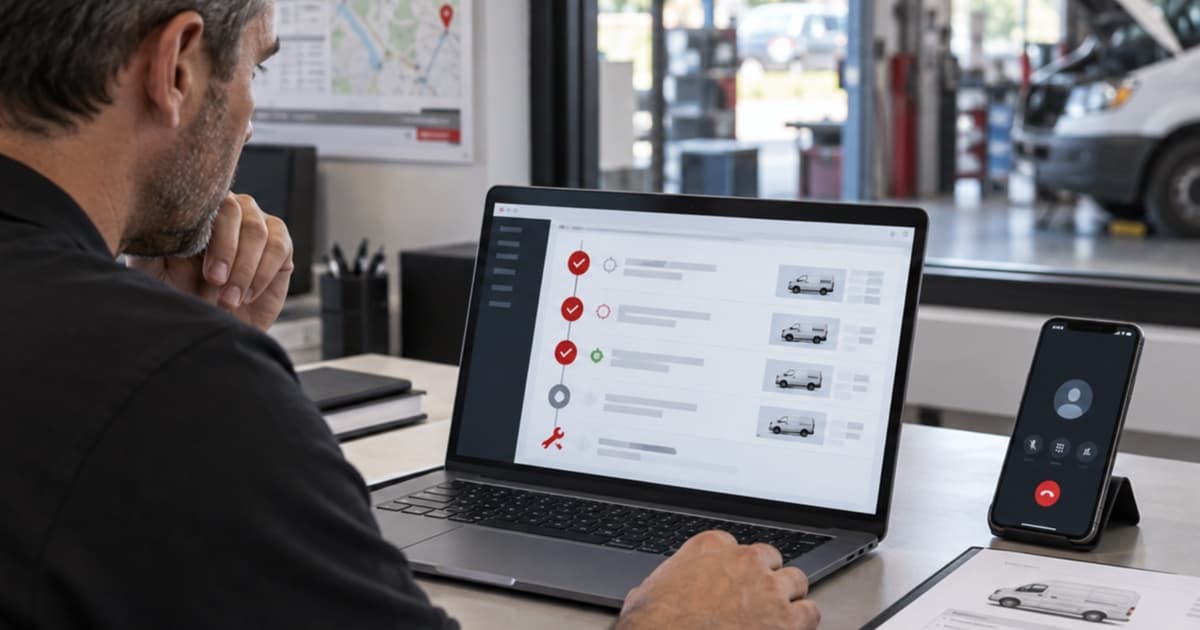
As traditional cost-cutting measures reach their limits, fleets are increasingly turning to digital solutions to improve maintenance efficiency without compromising vehicle reliability. The data from Decisiv and TMC shows that fleets implementing digital tools are achieving better cost control and operational efficiency compared to those relying on traditional maintenance approaches.
This digital transformation is gaining momentum through strategic partnerships in the fleet technology space. The collaboration between Fleetio and Motive represents a significant development in fleet maintenance and optimization platforms, while Fleet Complete's launch of its comprehensive fleet management platform signals growing industry investment in integrated digital solutions.
However, adoption patterns reveal an interesting paradox: while digital tools are proving effective for cost management, most fleets remain cautious about AI adoption, according to Fleetio's benchmark report. This hesitation comes despite emerging success stories, such as Pilot's fleet maintenance program, which is demonstrating tangible benefits from AI integration.
Strategic Approaches to Parts Management and Maintenance Scheduling
Fleet managers are fundamentally rethinking their approach to parts decisions and maintenance scheduling as they seek to cut costs without cutting corners. The industry is witnessing a shift toward more sophisticated parts strategies that balance cost containment with reliability requirements.
The challenge is particularly acute given current market conditions. Fleet Equipment Magazine's analysis highlights how managers must focus on controllable factors when market conditions remain uncooperative. This includes optimizing preventive maintenance schedules to address real-time cost pressures while ensuring vehicles remain operational and safe.
Industry events are reflecting these priorities, with TMC's Fall Meeting focusing specifically on "Fleet Maintenance Fundamentals" – a clear signal that the industry recognizes the need to return to core principles while integrating new technologies and approaches.
Industry Adaptation and Future Outlook
The fleet maintenance landscape is experiencing structural changes that extend beyond technology adoption. Personnel movements, such as Fleet Advantage naming a new Senior Director of Fleet Services, reflect the industry's recognition that specialized expertise is crucial for navigating current challenges.
Organizations like NAFA are responding with initiatives designed to support fleet managers through these transitions. Their "Beyond Fleet Campaign" acknowledges that today's fleet managers require expanded skill sets and resources to manage increasingly complex operations effectively.
The maintenance sector is also seeing consolidation activity, with companies like Wichita Inland Truck absorbing fleet maintenance employees, suggesting that larger operations may be better positioned to weather current cost pressures and invest in efficiency-improving technologies.
For fleet managers, the message is clear: while maintenance costs remain elevated compared to historical norms, the combination of stabilizing cost trends and improving digital tools offers a path forward. Success will likely depend on strategic technology adoption, refined parts management approaches, and maintaining focus on preventive maintenance fundamentals even as operational pressures mount.
The industry data suggests that fleets taking a measured approach to digital transformation – implementing proven technologies while maintaining proven maintenance practices – are best positioned to achieve sustainable cost management in the current environment.